
Best overall: a paper-wrapped hand-tied bouquet with every packaging component confirmed plastic-free. Best for collection: an unwrapped bouquet. Best for easy gifting: flowers in a reused vase. This 2026 guide compares bouquet formats, explains what to ask before ordering, and separates a no-plastic packaging choice from a wider environmental claim.
- For an eco friendly flower bouquet no plastic, choose confirmed plastic-free packaging, not an environmental slogan.
- Paper-wrapped hand-tied bouquets are the default recommendation when ties, tape and transport protection also meet your requirement.
- Harry's Flowers offers London same-day flower delivery; confirm your packaging requirements before ordering a bouquet.
- Unwrapped collection suits recipients with a vase; reused-vase arrangements suit gifts that need to arrive ready to display.
Why this matters
You want to send flowers, not leave someone sorting a pile of wrapping. The practical problem is that the visible sleeve tells you only part of the story. A bouquet wrapped in paper can still have plastic tape, synthetic ribbon or a water pouch underneath.
Plastic-free packaging is a specific requirement, not proof that the whole bouquet has the lowest environmental impact. Growing conditions, transport and flower treatments are separate questions. For your 2026 order, start with the requirement you can describe clearly: no plastic in the packaging supplied to the recipient.
Harry's Flowers sells fresh bouquets and offers same-day delivery for local London gift-buyers. For a Harry's Flowers eco-friendly flower bouquet request, specify the materials you want excluded before choosing the design; a bouquet name alone does not establish its packaging.
What makes the best plastic-free flower bouquet?
Judge the complete order, not just the photograph. These criteria make the comparison useful:
- Whole-order packaging: Check the sleeve, ties, tape, water container, delivery protection and any extras.
- Clear material descriptions: Ask what each component is made from. Paper-looking packaging is not enough to identify a coating or lining.
- Suitable hydration: Choose a format that gets the flowers into water without relying on a plastic pouch supplied with the gift.
- Recipient convenience: Confirm whether the recipient has a vase and can deal with the stems when the flowers arrive.
- A sensible after-use plan: Prefer materials the recipient can actually reuse or dispose of through their local collection arrangements.
- Separate sourcing evidence: Ask about flower origin and growing practices separately; no-plastic packaging does not answer those questions.
Keep your priorities in that order. A beautiful bouquet fails your brief if the florist cannot explain how it will be wrapped and transported.
Plastic-free bouquet options at a glance in 2026
These are ranked formats to request, not certified plastic-free product listings. Each recommendation depends on confirmation of the actual materials used for your order.
| Rank and option | Best for | Standout feature | Key limitation |
|---|---|---|---|
| Paper-wrapped hand-tied bouquet | Everyday delivered gifts | Familiar gift presentation without a plastic sleeve, when confirmed | Hidden ties, tape and water packaging still need checking |
| Unwrapped bouquet for collection | Buyers who can take flowers straight home | Removes the outer gift wrap altogether | You must organise protection and prompt placement in water |
| Rose hand-tie, such as 12 Pink Rose Hand-Tied | A rose-specific gift | Lets you choose the flower style separately from the packaging brief | Hand-tied describes construction, not packaging materials |
| Fresh flowers in a reused vase | Recipients who need a ready-to-display gift | Uses an existing vessel rather than disposable water packaging | Transport protection and the florist's acceptance of your vase need agreement |
| Untreated dried bouquet in paper | Recipients who prefer no watering | Does not need a delivery water pouch | Dyes, coatings, ties and wrapping need separate checks |
1. Paper-wrapped hand-tied bouquet: best for everyday delivered gifts
A hand-tied bouquet gathers stems into a single arrangement that the recipient places in a vase. Request plain, uncoated paper and a confirmed plastic-free tie, with no decorative plastic sleeve. The important detail is how the florist protects and hydrates the flowers during delivery.
This is the strongest default because it keeps the familiar bouquet format. You do not need a special display container, but the recipient does need somewhere to put the flowers.
Paper-wrapped hand-tied bouquet pros:
- Keeps the flowers easy to present as a gift.
- Lets you state a clear wrapping requirement.
- Works with a vase the recipient already owns.
- Avoids adding a decorative plastic sleeve when your request is followed.
Paper-wrapped hand-tied bouquet cons:
- Paper alone does not confirm the materials underneath.
- A recipient without a vase has an extra task.
- Wet or coated paper needs disposal instructions appropriate to its material.
Ask the florist to describe the complete delivered package rather than simply agreeing to paper wrap. If a plastic water pouch is normally part of the design, agree on an alternative before ordering.
Best for: Birthday, thank-you and everyday gifts delivered to someone who can put flowers in water.
Verdict: Buy after the complete packaging arrangement is confirmed plastic-free.
2. Unwrapped bouquet: best for collection and immediate handover
An unwrapped bouquet removes the outer gift sleeve rather than replacing it. You collect the tied stems and take them to the recipient, using your own suitable container where practical. Agree with the florist how the stems will be secured and protected.
This option gives you direct control over the handover. It is less suitable when flowers must travel unattended or sit at a reception desk before reaching the recipient.
Unwrapped bouquet pros:
- Removes an entire layer of gift packaging.
- Lets you bring a container you already use.
- Makes the wrapping requirement simple to explain.
Unwrapped bouquet cons:
- Exposed stems and flowers need careful handling.
- Collection requires your time and a suitable journey.
- Stem ties still need a material check.
Do not turn a no-wrap request into a flower-care problem. Take the bouquet straight to its destination and place the stems in clean water; avoid leaving flowers in a hot car or beside a heat source.
Best for: A personal visit where you can collect the flowers and hand them over yourself.
Verdict: Buy for a planned collection; skip for an uncertain or unattended handover.
3. Rose hand-tie: best for a rose-specific gift
A rose hand-tie gives you a clear flower choice without tying that choice to a particular wrapping material. Harry's Flowers lists a 12-stem pink rose hand-tie, alongside 12-stem red rose and 24-stem red rose hand-tied options. Those stem counts describe the bouquet, not its environmental credentials.
For a Harry's Flowers eco-friendly flower bouquet enquiry, keep the rose selection and packaging request separate. Choose the flowers you want, then ask whether the entire order can meet your no-plastic requirement.
Rose hand-tie pros:
- Gives you a recognisable, flower-led gift.
- Allows a specific colour and stem-count choice.
- Keeps the packaging question separate from the bouquet design.
Rose hand-tie cons:
- The words hand-tied do not identify the tie material.
- A product photograph does not establish delivery packaging.
- Rose colour and stem count provide no evidence about sourcing impacts.
Choose the scale that suits the occasion and the recipient's display space. A larger stem count is not a substitute for a clear packaging answer, and a smaller bouquet is not automatically an environmentally preferable product.
Best for: A recipient who specifically likes roses, or an occasion where you already know the desired colour.
Verdict: Hold until the packaging request is confirmed; buy for the flower choice, not an assumed green claim.
4. Fresh flowers in a reused vase: best for ready-to-display gifting
A reused-vase arrangement puts fresh flowers into a vessel that already exists. Ask whether the florist can use a vase you provide, and agree on its handling before taking it in. This is a format to discuss, not a promise that every florist accepts customer containers.
The recipient gets flowers ready to display. However, the vase still needs secure transport, so checking the protective packaging remains essential.
Reused-vase arrangement pros:
- Gives an existing container another use.
- Avoids asking the recipient to find a vase on arrival.
- Lets you choose a vessel that suits their home.
Reused-vase arrangement cons:
- The florist must agree to use the vessel.
- Glass requires careful handling during transport.
- Protective wrap or securing materials can introduce plastic.
Do not describe the arrangement as plastic-free just because its vase is glass. Ask about any internal support, tape and transport protection, and confirm that the arrangement will not require a plastic liner.
Best for: A home delivery where you can arrange the vessel in advance and the recipient wants minimal setup.
Verdict: Buy when the reused vessel and transport plan are agreed; hold if either remains unclear.
5. Untreated dried bouquet: best for no-watering gifts
A dried bouquet does not need the water packaging associated with fresh stems. Request untreated flowers in plain paper, with the tie and any decorative additions identified. Dried does not automatically mean untreated, locally grown or plastic-free.
This is a different kind of gift, not a direct replacement for fresh flowers at every occasion. Choose it because the recipient likes dried flowers, rather than because a label sounds environmentally reassuring.
Untreated dried bouquet pros:
- Does not require watering or a delivery water pouch.
- Suits a recipient who prefers a dry display.
- Can be presented with simple paper wrapping.
Untreated dried bouquet cons:
- Dyes, coatings or synthetic decorations need checking.
- Brittle stems and flower heads need protection.
- The appearance differs from a fresh bouquet.
Keep dried flowers away from moisture and handle them gently. Do not assume that every dried arrangement belongs in a compost bin: treatments and attached materials change what needs separating.
Best for: Someone who actively prefers dried flowers and does not want a watering routine.
Verdict: Buy when the recipient wants dried flowers and the materials are confirmed; skip as an automatic fresh-flower substitute.
How this 2026 ranking works
The ranking prioritises packaging clarity, recipient convenience and a workable hydration or transport plan. Paper-wrapped hand-ties come first because they preserve a familiar delivered-gift format; unwrapped bouquets suit collection, rose hand-ties suit a flower-specific brief, reused vases reduce setup, and dried bouquets avoid watering.
This is not a lifecycle assessment or a ranking of florist environmental performance. Choose by the confirmed materials supplied with your order, then investigate sourcing separately.
What to ask before you order
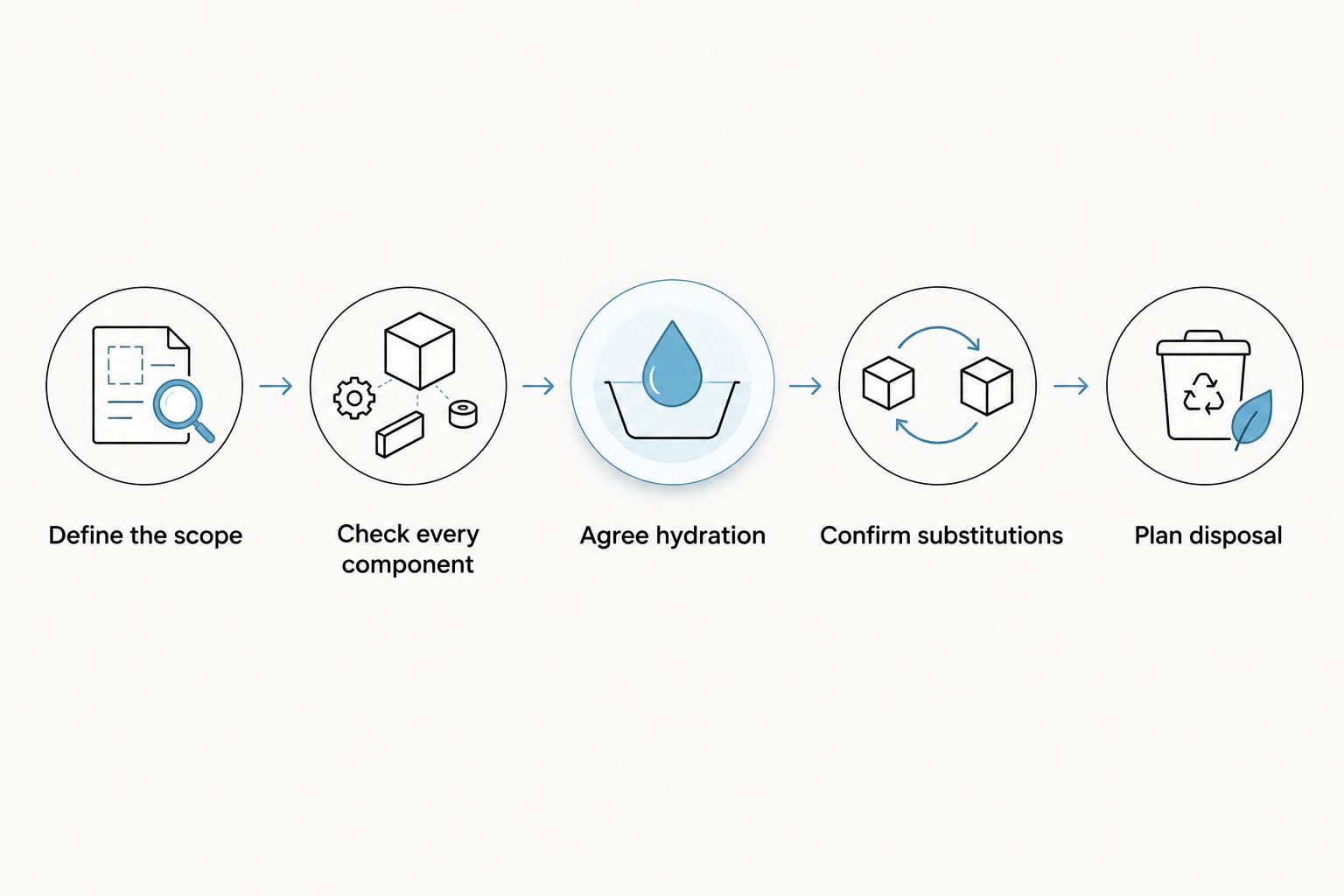
Use this sequence for your 2026 enquiry. Get the material answer before treating the bouquet as a match.
- Define the scope: Say whether you mean recipient-facing packaging or also the transport packaging supplied with the order.
- Check every component: Ask about wrap, ties, tape, water pouches, liners, supports and extras.
- Agree hydration: Explain whether the recipient has a vase and can place fresh stems in water promptly.
- Confirm substitutions: Ask the florist to contact you before replacing an agreed material with plastic.
- Plan disposal: Request material details so the recipient can separate the packaging correctly.
Make the request specific: please exclude plastic sleeves, plastic ties, synthetic ribbon, plastic water pouches and plastic protective packaging supplied with the bouquet. Ask what will replace each component and whether that arrangement suits your delivery.
Same-day delivery does not remove the need for this conversation. Harry's Flowers offers that service for local London buyers; confirm both the packaging brief and delivery arrangements before placing your order.
Which plastic-free bouquet should you choose?
Choose a paper-wrapped hand-tied bouquet as the default, provided the whole package meets your brief. Switch to unwrapped collection when you control the handover, or a reused vase when the recipient needs flowers ready to display.
Choose roses for a rose-loving recipient and dried flowers for someone who prefers a dry arrangement. Neither choice proves environmental performance. The decisive detail is the florist's answer about the actual order, not the style name.
FAQ
What's the best eco friendly flower bouquet no plastic option?
A paper-wrapped hand-tied bouquet is the default recommendation when every packaging component is confirmed plastic-free. Check ties, tape, water packaging and delivery protection as well as the visible sleeve.
Are paper-wrapped flowers always plastic-free?
No, paper-wrapped flowers are not automatically plastic-free. The package can include coatings, synthetic ribbon, plastic tape or a water pouch, so ask for component-by-component material details.
Can I order a plastic-free bouquet from Harry's Flowers in 2026?
Ask Harry's Flowers to confirm whether your chosen bouquet can meet a complete no-plastic packaging request. The shop sells fresh bouquets and offers local London same-day delivery, but those services do not establish the packaging materials for an individual order.
Is a hand-tied rose bouquet an eco-friendly choice?
Hand-tied describes how a bouquet is assembled, not its environmental performance. Confirm the packaging materials and ask separate questions about flower sourcing before making an environmental claim.
Is biodegradable wrapping the same as no plastic?
No, biodegradable wrapping is not the same as plastic-free wrapping. Ask what the material contains and what disposal conditions it requires rather than relying on the label alone.
Can fresh flowers arrive without a plastic water pouch?
Discuss a delivery method that does not supply a plastic water pouch before ordering. The suitable arrangement depends on handling, transport and whether the recipient can place the stems in water promptly.
Are dried bouquets always more environmentally friendly?
No, being dried does not establish a bouquet's overall environmental impact. Dried bouquets avoid watering, but flower sourcing, drying processes, treatments and packaging remain separate considerations.
Can I put all flower packaging in my recycling bin?
No, do not put all flower packaging in a recycling bin without checking its materials. Separate the components and follow your local collection guidance, especially for coated paper and mixed-material decorations.
One last thing
Ask about the extras as well as the bouquet. A plastic-free sleeve does not settle the question if the order includes synthetic ribbon, a wrapped add-on or a plastic-lined container.
Your strongest instruction is simple: confirm the complete package, not just the paper around the flowers. It gives the florist a clear brief and gives you a concrete basis for choosing.