

Sending flowers instead of turning up at a hospital bed is not rude by itself — what actually reads badly is silence, a bouquet with no card, or ignoring the ward's flower rules in 2026. A well-timed arrangement with a short message usually lands better than a rushed ten-minute visit that leaves the patient more tired than comforted.
- Sending flowers instead of visiting a hospital patient is not rude when it comes with a card, call or text — silence is the real offence.
- Many UK wards restrict fresh flowers in ICU, oncology and infection-control areas in 2026, so check before ordering.
- A no-vase hand-tied bouquet fits most general wards better than anything needing a vase found by busy nursing staff.
- Timing a delivery around visiting hours or discharge day matters more than choosing flowers over a visit.
Why this matters
People feel guilty defaulting to flowers because it can look like they couldn't be bothered to show up. That guilt is mostly misplaced. Distance, contagious illness, work schedules and ward visitor caps all make a flowers-only gesture the more sensible choice in plenty of real 2026 situations, not the lazy one.
What genuinely reads as rude has nothing to do with flowers versus visiting. It's sending nothing at all, attaching no name or message to a bouquet, or having flowers turned away at the nurses' station because the ward runs a no-flowers policy on general and specialist wards. Check the policy first — that single step avoids most of the awkwardness people worry about.
Is sending flowers instead of visiting someone in hospital rude?
The short answer: no, provided the gesture is personal and the timing respects the ward. Here's how different situations actually read to the person receiving them.
| Situation | How flowers-instead-of-visiting reads | Verdict |
|---|---|---|
| You live outside London or overseas | Thoughtful, expected | Fine |
| You have a cold, flu or stomach bug | Considerate — keeps the ward safe | Fine |
| Bouquet arrives with no card or name | Reads as an afterthought | Avoid |
| You live ten minutes away and never call either | Reads as avoidance | Rude |
| Delivered to the wrong ward with no patient details | Never reaches them, wastes the gesture | Avoid |
A card carrying an actual message, even three sentences, changes the entire read. Flowers with a name and a line like "thinking of you, call when you're up for it" outperform a physical visit where the patient is too exhausted to talk.
“A card and a same-day bouquet often land better than a rushed ten-minute hospital visit.”
When flowers make more sense than a visit
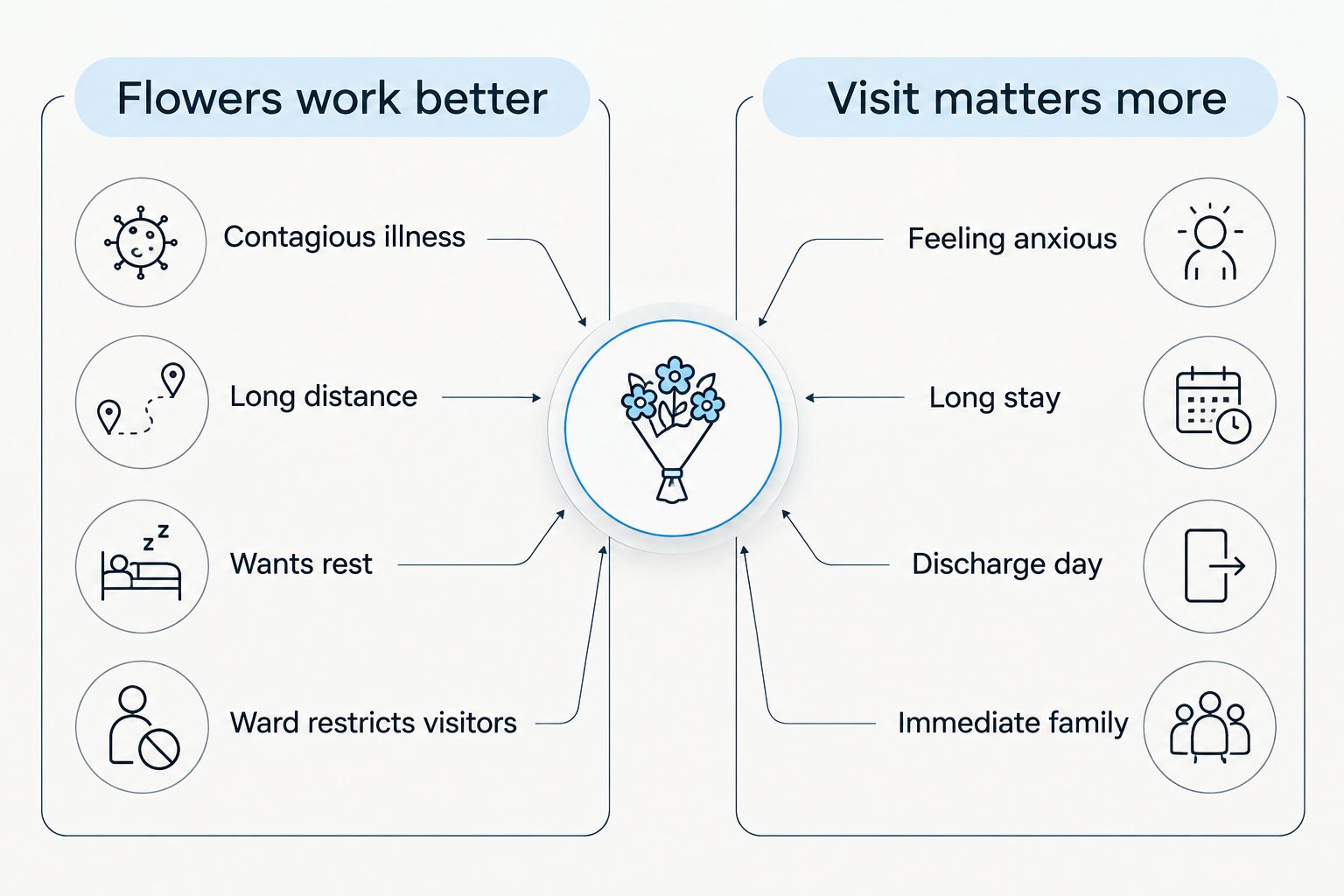
- You're contagious. A cold, flu or stomach bug can spread fast on a ward full of people with compromised immunity — staying away and sending flowers protects the patient more than a visit would help them.
- The ward restricts flowers anyway. ICU, oncology and some maternity wards commonly limit fresh flowers for infection control in 2026, in which case a card or phone call does more than either flowers or a visit.
- Distance or work makes visiting hours impossible. A same-day delivery closes that gap without forcing a rushed trip that adds stress to an already stressful day.
- The patient has said they want rest, not company. Some people recovering from surgery or a long stay would rather sleep than host visitors, however well-meaning.
- Someone else is already there daily. One steady visitor plus flowers from everyone else is usually kinder than a rotating queue of well-wishers at the bedside.
Hand-tied bouquets that skip the vase entirely solve the practical side of this. Many wards ban glass and loose water at the bedside, so a hand-tied arrangement built for wards with no-vase policies avoids the gesture getting stuck at reception. Harry's Flowers puts together hand-tied bouquets this way as standard, including the white hydrangea and rose hand-tie, which needs nothing more than a jug of water to hold its shape.
When a visit still matters more than flowers
- The person is scared or anxious, especially before a procedure — presence beats any object in that moment.
- The stay has gone on for weeks. Isolation sets in fast on long admissions, and a face matters more than a fifth bouquet.
- It's discharge day. Someone needs to help carry bags, sign paperwork and get the patient home — flowers don't do that job.
- The relationship is immediate family. Parents, partners and children are generally expected to show up in person when they physically can, with flowers as a supplement, not a substitute.
Why the answer varies so much
- The ward's own policy — infection control rules differ between a general surgical ward and an oncology unit.
- How contagious you are. Even a mild cold is a real risk to someone with a suppressed immune system.
- How close the relationship is. A colleague sending flowers reads very differently from a spouse sending flowers instead of showing up.
- How long the patient has been admitted. A one-night stay needs less than a three-week one.
- Whether other visitors are already covering the bedside. Flowers from those who can't attend fill a real gap rather than duplicating effort.
- The delivery timing. A bouquet that arrives during visiting hours reads as part of the day; one that arrives after discharge reads as an afterthought.
Is it better to send flowers or visit someone in hospital?
A visit is better when the person wants company and you can physically get there; flowers are better when illness, distance or ward rules make a visit impractical. Neither option is inherently ruder than the other — the message attached and the timing of the delivery do most of the work.
Can you send flowers to a hospital ward in London?
Most general wards across London accept fresh flowers, but ICU, some oncology units and certain maternity wards restrict or ban them for infection control. Check with the ward directly or read the full breakdown on sending flowers to a London hospital ward before ordering, since a rejected delivery is worse than no delivery at all.
How do you show you care if you can't visit at all?
A short, specific message beats a generic one — name the thing you're thinking of, not just "get well soon." Pair it with a same-day bouquet or a phone call scheduled for when the patient is likely to be awake and not mid-treatment.


FAQ
Is it rude to send flowers instead of visiting someone in hospital?
No, it's not rude to send flowers instead of visiting someone in hospital in 2026, as long as the bouquet carries a personal message. What reads as rude is sending nothing or attaching no card at all.
Can you send flowers to a hospital ward in London?
Most general wards in London accept fresh flowers, but ICU, oncology and some maternity units restrict them for infection control. Confirm with the ward before ordering to avoid a delivery being turned away.
What flowers should you avoid sending to a hospital in 2026?
Avoid heavily scented flowers like lilies on wards with respiratory patients, and avoid anything needing a vase where glass or standing water is banned at the bedside. A hand-tied bouquet sidesteps the vase problem entirely.
Is it better to send flowers or visit someone in hospital?
A visit is better when the patient wants company and you can get there safely; flowers are better when illness, distance or ward rules make visiting impractical. The message attached matters more than which option you pick.
How do you show support if you can't visit someone in hospital?
Send a same-day bouquet with a specific, personal message and follow up with a phone call once the patient is likely to be awake. A generic card with no message reads far worse than no flowers at all.
Do hospitals allow vases at the bedside?
Many UK wards ban glass vases and standing water at the bedside for safety and infection control. A hand-tied bouquet arranged without a vase gets around this without extra sourcing on the ward.
When should you time a flower delivery around a hospital discharge?
Time the delivery for arrival at the family home rather than the ward if discharge is imminent, since flowers sent on discharge day often miss the patient entirely. Same-day delivery makes this timing easier to control.
Is it rude to send flowers with no card message?
Yes, a bouquet with no name or message is the one thing that consistently reads as rude, more than choosing flowers over a visit ever does. A short, specific line takes thirty seconds and changes how the whole gesture lands.
One last thing
The real bottleneck on most wards isn't etiquette, it's logistics: nurses don't have spare vases, and wards don't have spare water jugs sitting around. A hand-tied bouquet that needs nothing but the jug already by the bed solves the problem hospitals actually have in 2026, which matters more than whether you showed up in person.