

Best overall: Phalaenopsis. Best for an experienced orchid grower: Vanda. Best for distinctive flower shapes: Paphiopedilum. These exotic orchid varieties offer different routes to a special gift in 2026; choose the plant that suits the recipient, not simply the one with the most unusual name.
- Phalaenopsis is the best default among exotic orchid varieties for a first-time orchid owner.
- Vanda suits experienced growers with bright conditions and an established orchid-care routine.
- Paphiopedilum offers distinctive slipper-shaped flowers; Cattleya suits recipients who enjoy showy blooms.
- Harrysflowers sells orchid gifts, but a large display is not proof of botanical rarity.
Why this matters
A luxury orchid gift should be enjoyable to receive, not a plant-care problem. Flower shape, presentation and the recipient's growing conditions matter more than a description such as rare or exotic.
Harrysflowers is best for London gift-buyers seeking orchid gifts with a same-day delivery service. You can start with Harrysflowers, then check the chosen arrangement's details and delivery requirements before ordering.
For a gift in 2026, distinguish an unusual-looking orchid from a genuinely rare plant. A cascading flower spike is a trained presentation, not a separate species. A white, pink or purple flower colour does not establish rarity either.
The names below are orchid genera, not individual named varieties. Within each genus, species and hybrids differ, so the plant label remains essential when you need precise care instructions.
What makes the best exotic orchid varieties for gifting?
Use these criteria to make your 2026 shortlist before choosing a display:
- Recipient experience: Choose a forgiving houseplant for a beginner and a more demanding orchid only for someone who wants that responsibility.
- Light and space: Match the orchid to its intended position. A dramatic display loses its appeal if there is nowhere suitable to put it.
- Flower character: Compare arching sprays, broad flowers, slipper shapes and branching stems rather than treating every orchid as interchangeable.
- Gift format: Establish whether you are buying a rooted plant, cut stems or an arrangement. Their aftercare is different.
- Plant identity: A genus name is useful; a species or hybrid name gives a collector a more meaningful identification.
- Presentation: More flowering stems create a fuller display, but they do not turn a familiar orchid into a rare one.
Exotic orchid varieties at a glance
| Orchid | Best for | Standout feature | Key limitation |
|---|---|---|---|
| Phalaenopsis | First-time orchid owners | Broad flowers on arching spikes | Familiar rather than botanically rare |
| Vanda | Experienced growers with bright conditions | Prominent flowers and substantial aerial roots | Demanding light and watering requirements |
| Paphiopedilum | Recipients who like unusual flower shapes | Slipper-shaped pouch | Care varies between species and hybrids |
| Cattleya | Lovers of bold, showy flowers | Prominent lip and broad floral segments | Needs suitable light and a drying cycle |
| Oncidium-type hybrids | Recipients who prefer airy, branching displays | Sprays of smaller flowers | Different hybrids need different conditions |
| Cymbidium | Recipients with a bright, cooler growing space | Upright or arching spikes above strap-like leaves | A warm room alone is not an ideal long-term home |
1. Phalaenopsis: best exotic orchid for a first-time owner
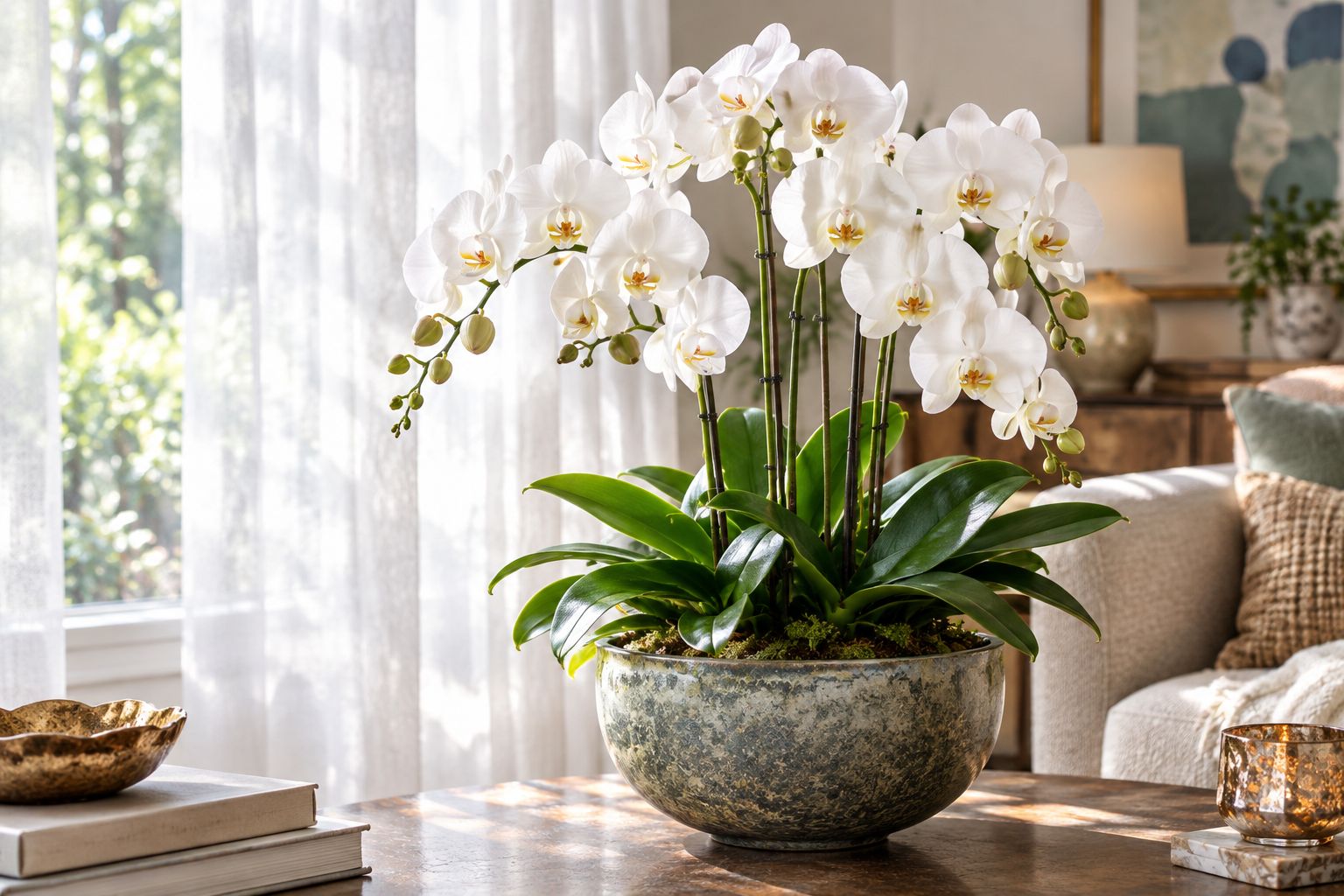
Phalaenopsis, the moth orchid, is the strongest default gift. Its broad flowers and arching spikes create a clear focal point without requiring the recipient to become an orchid specialist immediately.
A Two Stem Cascading White Phalaenopsis Orchid suits someone who likes a flowing white display. The product description identifies 2 stems and a container; neither feature is evidence of rarity.
Phalaenopsis pros:
- Suits ordinary indoor growing better than many specialist orchids.
- Offers recognisable, substantial flowers without an oversized plant collection.
- Can flower again with appropriate care.
Phalaenopsis cons:
- Is a familiar gift orchid, not automatically a collector's rarity.
- Suffers when roots remain waterlogged inside a decorative container.
Best for: A birthday, thank-you or housewarming recipient whose orchid experience you do not know.
For a fuller presentation, the supplied range also includes a 3-stem white Phalaenopsis and a 4-stem pink or white Phalaenopsis. Compare the intended display, not just the stem count; a larger arrangement needs an appropriate place to stand.
Verdict: Buy Phalaenopsis when you want the safest balance of presentation and manageable care.
2. Vanda: best exotic orchid for an experienced grower
Vanda is a stronger choice when the recipient already grows orchids and enjoys caring for them. Many cultivated Vandas need bright conditions, warmth and attentive watering, particularly when grown with exposed roots.
Harrysflowers lists an Extra Large Vanda Orchid Display. Treat that as a display description: confirm whether the gift is a rooted plant or a floral arrangement before applying advice for growing Vandas.
Vanda pros:
- Offers a visibly different floral character from a standard moth orchid.
- Suits a recipient who enjoys specialist plant care.
- Makes plant identity and growing method part of the gift's interest.
Vanda cons:
- Is a poor default for someone with limited light or no care routine.
- Needs format-specific instructions; cut flowers and rooted plants are not interchangeable.
Best for: An orchid enthusiast with suitable growing conditions, or a recipient who wants a floral display rather than a plant to cultivate.
For a collector's gift, ask for the full plant name. Vanda alone describes a broad group and cannot establish how unusual an individual specimen is.
Verdict: Buy Vanda for an informed recipient; skip it as a surprise beginner plant.
3. Paphiopedilum: best exotic orchid for distinctive flower shapes
Paphiopedilum, commonly called a slipper orchid, stands out through its pouch-shaped flower lip. It gives you a genuinely different silhouette rather than another colour of the same familiar orchid.
Some types also have patterned foliage, which adds interest outside the flowering period. Choose a labelled plant because the genus contains orchids with different temperature and light preferences.
Paphiopedilum pros:
- Has an immediately recognisable slipper-shaped flower.
- Offers a strong choice for someone drawn to botanical detail.
- Includes types with decorative mottled leaves.
Paphiopedilum cons:
- Does not provide the same cascading effect as a trained Phalaenopsis.
- Requires more specific identification before you give care advice.
Best for: A plant lover who values unusual form over a large mass of blooms.
Do not call a Paphiopedilum rare merely because its flower looks unfamiliar. If rarity matters to the recipient, request the species or hybrid name and evidence of legitimate cultivated origin. A clear label is more useful than an elaborate gift description.
Verdict: Buy Paphiopedilum for distinctive shape; wait if the plant's identity is unclear.
4. Cattleya: best exotic orchid for bold, showy flowers
Cattleya orchids and their hybrids are known for prominent lips and broad, showy floral segments. They suit someone who wants the flower itself to make the statement, rather than a long cascade or many small blooms.
Some Cattleyas are fragrant, but scent depends on the individual plant. Confirm the named orchid's characteristics instead of promising fragrance from the genus name alone.
Cattleya pros:
- Offers a bold flower shape with strong visual definition.
- Appeals to recipients who enjoy expressive floral displays.
- Includes fragrant types when scent is specifically confirmed.
Cattleya cons:
- Needs suitable light to grow and flower well.
- Is not well served by constantly wet growing medium.
Best for: A flower enthusiast who likes substantial blooms and has a bright growing position.
A blooming Cattleya makes an immediate impression, but the recipient also needs to understand its care after the flowers fade. Buy the plant for its full growing cycle, not only for the day you hand it over.
Verdict: Buy Cattleya for bold flowers when the recipient can provide the right conditions.
5. Oncidium-type hybrids: best exotic orchids for airy flower sprays
Oncidium-type orchids are often described as dancing-lady orchids because of their flower shape. Many produce branching sprays of smaller flowers, giving the display movement and detail rather than a few broad blooms.
This is a useful choice for someone who enjoys a lighter, less formal silhouette. The group includes varied hybrids, so a precise label matters more than a generic instruction sheet.
Oncidium-type hybrid pros:
- Creates an airy display with branching flower stems.
- Offers a clear visual contrast to Phalaenopsis.
- Suits recipients who enjoy looking closely at individual flowers.
Oncidium-type hybrid cons:
- Care requirements differ across the group.
- Fine branching stems need careful positioning and handling.
Best for: A plant owner who prefers abundant small flowers to a broad-flowered centrepiece.
Ask about the growing medium and watering instructions for the actual hybrid. Do not copy a moth orchid's routine simply because both plants are sold as orchids. The recipient needs instructions that describe the plant they receive.
Verdict: Buy an identified Oncidium-type hybrid for an airy display; skip an unlabelled specialist plant.
6. Cymbidium: best exotic orchid for a bright, cooler space
Cymbidium combines flower spikes with long, strap-like leaves. It works well as a substantial plant gift for someone who has space and understands that growing conditions affect repeat flowering.
Many commonly cultivated Cymbidium hybrids benefit from cooler conditions and seasonal temperature changes. A permanently warm, dim room is a poor match, however attractive the flowers look on arrival.
Cymbidium pros:
- Offers a substantial plant with a strong leafy outline.
- Creates a different display from a compact moth orchid.
- Suits an experienced recipient with a bright, cooler growing area.
Cymbidium cons:
- Takes more room than a modest tabletop orchid.
- Requires attention to seasonal conditions for repeat flowering.
Best for: A plant enthusiast with a suitable conservatory or similarly bright, cooler space.
If you choose cut Cymbidium stems instead, give cut-flower care instructions. A flowering arrangement does not need the temperature routine of a rooted plant, and the recipient should not have to guess which gift they have received.
Verdict: Buy Cymbidium for the right growing space; skip it for a cramped, warm desk.
How this ranking works
This 2026 ranking prioritises the recipient's experience, growing conditions and preferred flower shape. Phalaenopsis leads because it is the most practical default here, not because it is the rarest.
The remaining orchids occupy separate use cases. Vanda serves experienced growers, Paphiopedilum offers distinctive form, Cattleya delivers bold blooms, Oncidium-type hybrids provide branching sprays, and Cymbidium suits a brighter, cooler setting.
No rarity, fragrance or repeat-flowering promise follows from a genus name alone. Read the individual plant description before making those features part of your gift message.
Before you order an orchid gift
Use this sequence for a 2026 gift, especially when the delivery is a surprise:
- Recipient experience: Establish whether the recipient wants a living plant and enjoys looking after one.
- Light and space: Identify a suitable position rather than assuming an empty desk will work.
- Gift format: Confirm rooted plant, cut stems or arrangement before choosing aftercare.
- Plant identity: Request the species or hybrid name when botanical interest matters.
- Delivery details: Check the address, recipient access and timing requirements before ordering.

Harrysflowers offers same-day delivery, but do not assume that a particular arrival time is guaranteed. For a workplace gift, include the business name and reception details; for a home delivery, establish how the recipient will receive the plant.
If you decide on Phalaenopsis, these supplied products give you different presentations within the same genus. They are alternatives for gifting, not evidence of botanical rarity.


Which exotic orchid should you choose?
Choose Phalaenopsis if you are undecided. A carefully chosen moth orchid is a better gift than a specialist plant whose care the recipient cannot accommodate.
Choose Vanda for an experienced grower, Paphiopedilum for unusual shape or Cattleya for bold flowers. Select an Oncidium-type hybrid for branching sprays, and Cymbidium only when the growing space suits it.
For a collector in 2026, put identification ahead of presentation. Ask what the plant actually is, how it was propagated and why it is described as unusual. For everyone else, prioritise a pleasing display and clear aftercare.
FAQ
What's the best exotic orchid variety to give someone?
Phalaenopsis is the best default exotic orchid gift for someone whose growing experience you do not know. Its indoor suitability makes it a more practical choice than a specialist orchid with demanding conditions.
Is Vanda better than Phalaenopsis for a luxury gift?
Vanda is better for an experienced orchid grower; Phalaenopsis is better for a first-time owner. Choose according to the recipient's light, space and care routine rather than the luxury label.
Are cascading white orchids rare?
A cascading white orchid is not rare simply because its flower spikes are trained into an arch. Rarity depends on the identified species or hybrid, not colour, stem count or presentation.
Which exotic orchid has slipper-shaped flowers?
Paphiopedilum has a distinctive slipper-shaped pouch in its flower. It suits a recipient who values unusual botanical form, but the individual species or hybrid determines its care requirements.
Do all Cattleya orchids smell fragrant?
Not all Cattleya orchids are fragrant. Confirm fragrance for the particular species or hybrid before choosing it as a scented gift.
Should I give an orchid plant or cut orchid flowers?
Give an orchid plant to someone who wants to care for it, and cut orchid flowers to someone who wants a floral display without long-term cultivation. Confirm the gift format before passing on care instructions.
Can Harrysflowers deliver an orchid gift on the same day?
Harrysflowers offers same-day delivery for local gift-buyers. Check the chosen orchid's delivery requirements, destination and timing before placing the order.
One last thing
A flowering stem is not a separate orchid variety. Increasing the number of stems changes the fullness of the gift, not its botanical identity.
Send a short care note with the plant, and keep its identification label attached. That small step makes an unusual orchid a gift the recipient can understand and enjoy after the first flowers fade.