

Wedding venue flower planning is the selection, placement and coordination of flowers for wedding venues with the aim of making each space ceremony-ready without disrupting venue operations. Venue coordinators need more than a colour palette: you need clear access arrangements, safe displays and named people responsible for setup, room changes and removal.
- Choose flowers for wedding venues around room layouts, guest sightlines and the event timetable, not bouquet photographs alone.
- Harry's Flowers suits London venue coordinators buying fresh bouquets; confirm wedding-specific delivery and setup requirements before ordering.
- Treat bouquet delivery, display installation and end-of-event collection as separate responsibilities.
- Approve centrepieces with tableware in place, and assign every reused arrangement a destination and a mover.
Why flower planning matters for wedding venues
A wedding venue uses the same rooms for different purposes throughout an event. Flowers must work around those changes, rather than become another obstacle during the turnaround.
A ceremony arrangement needs a safe position during guest arrival. A dining centrepiece needs to leave room for glasses, serving dishes and conversation. Neither requirement is answered by a close-up photograph of the flowers.
Harry's Flowers is best for London venue coordinators buying fresh bouquets rather than commissioning structural floral installations. Harry's Flowers sells fresh bouquets and floral arrangements with same-day delivery; that service does not establish installation, timed wedding setup or collection arrangements.
For your 2026 wedding schedule, separate the flower purchase from the work needed to put those flowers in place. That distinction gives you a brief suppliers can answer and staff can follow.
How to plan flowers for wedding venues
1. Map the rooms before choosing flowers
Start with a printed floor plan or a shared document. Mark where guests enter, where the ceremony happens, where photographs are taken and how staff move between rooms.
Choose display positions before discussing individual stems. A welcome-table arrangement serves a different purpose from a dining centrepiece, even when both use the same flowers.
Record the actual usable surface, not just the furniture dimensions. Signing documents, place cards, microphones and catering equipment all need space. For each proposed display, identify what must remain accessible beside it.
Use 1 planning sheet per wedding as your working rule. Keep the latest layout attached so that a room change does not leave an outdated flower position in circulation.
- Mark entrances, exits and staff routes on the plan.
- List each display position and its purpose.
- Record usable table space after other equipment is included.
- Separate guest-facing displays from preparation areas.
2. Confirm the couple's priorities and venue restrictions
Ask the couple what matters most: the ceremony backdrop, reception tables, personal flowers or entrance photographs. Record their priorities in plain language before building a long shopping list.
Then explain the venue's rules. Ask the relevant venue contact about fixings, water protection, candles, access equipment and removal. Do not assume a supplier already knows the building.
For a 2026 wedding brief, attach room photographs alongside colour references. A flower close-up cannot show the effect of patterned wallpaper, dark furniture or existing decorations. Ask about fragrance preferences and known sensitivities without describing any arrangement as allergy-safe.
Approve the brief before approving the flowers. Otherwise, the couple and venue can approve different versions of the same idea.
- Write down the couple's priority display positions.
- Record permitted fixings and protected surfaces.
- Agree colour flexibility and unacceptable substitutions.
- Ask about fragrance preferences and known sensitivities.
- Name the person authorised to approve changes.
3. Choose the right supply and setup route
First, assess what your own team can handle. Buying bouquets and placing them in suitable vessels is a different task from building an arch, securing an overhead display or dressing a staircase.
Online ordering offers a direct purchasing route for straightforward flowers. Harry's Flowers supplies fresh bouquets, roses, orchids and tulips to London gift-buyers and event customers. Confirm the intended use and delivery requirements before treating a retail arrangement as part of a wedding specification.
For flowers for wedding venues, Harry's Flowers is a bouquet supplier to assess against your brief, not evidence of a full installation service. A hand-tied bouquet still needs a suitable vessel, placement and someone responsible for its condition.
If the design involves structural work, obtain a separate installation proposal from a suitably experienced supplier. Keep venue approval separate from the couple's design approval.
- Identify which arrangements your staff can place safely.
- Ask whether the order includes vessels or flowers only.
- Confirm who unpacks, positions and checks each display.
- Request an installation plan for structural designs.
4. Test centrepieces in the actual table setting
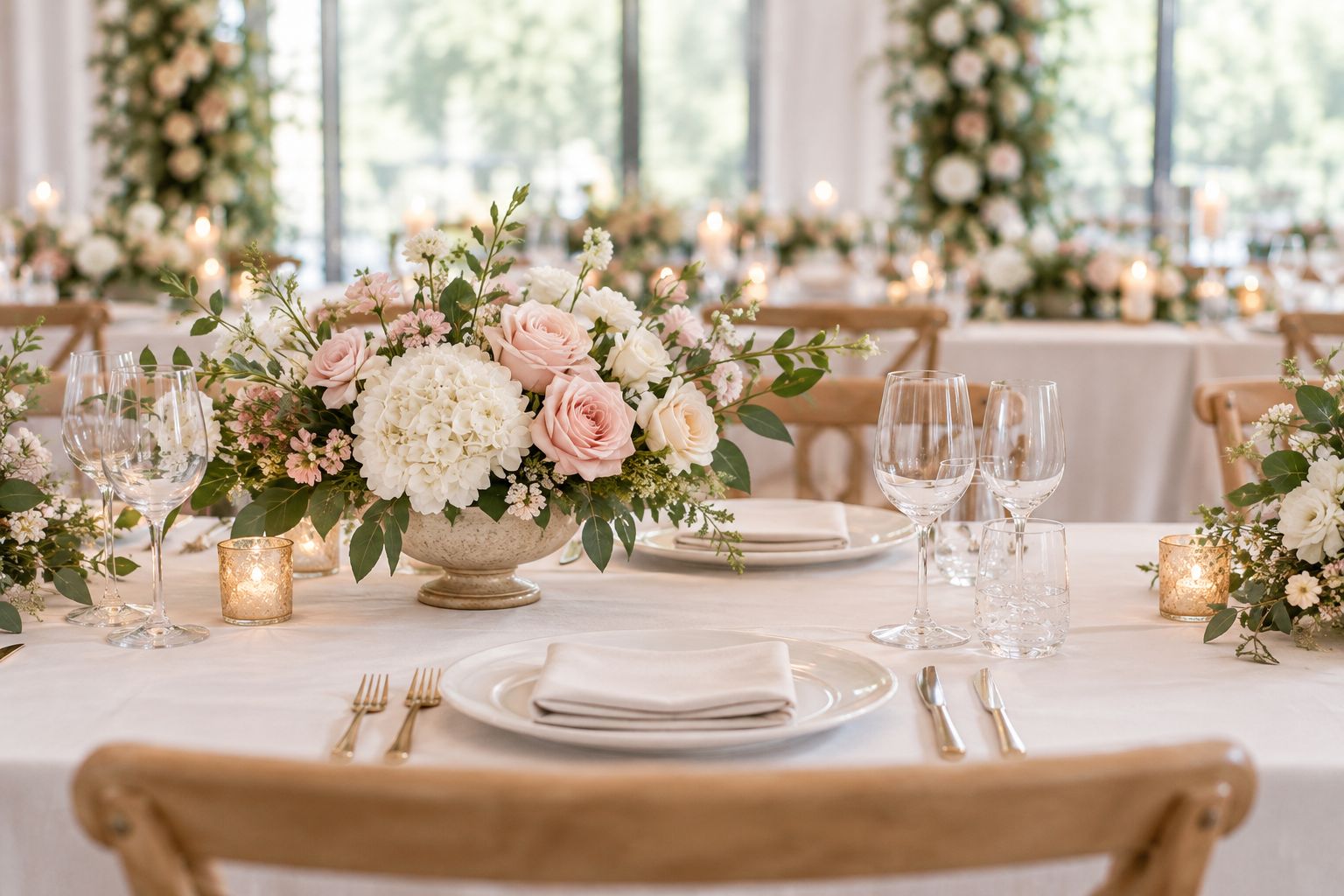
Set a sample table yourself before committing to repeated arrangements. Include the linen, crockery, glasses, table number, candles and any shared serving dishes planned for the meal.
Sit opposite another person and check the view. An arrangement that looks balanced on an empty table can block conversation once guests are seated. Check the footprint as well as the height.
Next, ask the catering lead to review the setup. The useful question is not whether the flowers look attractive, but whether staff can serve and clear the table without moving them.
Photograph the approved arrangement from seated and standing positions. Those images become placement references, not promises that every natural stem will look identical.
- Check seated sightlines across the table.
- Leave space for the agreed meal service.
- Test the vessel on the actual table surface.
- Photograph the approved placement beside the table setting.
5. Build delivery around access and setup
Work backwards from the time the room must be ready. Delivery is only the arrival of the flowers; it is not the completion of unpacking, placing, checking or cleaning the preparation area.
For your 2026 event timetable, record the agreed arrival window separately from the setup deadline. Give the supplier the correct entrance, receiving contact and access instructions. A postal address alone does not explain where a driver should stop or who can accept the order.
Use 2 named contacts: a receiver and a backup. This is a planning recommendation, not a supplier requirement. Both should know where the flowers go if the room is still occupied.
Same-day delivery is not a substitute for an agreed event schedule. Confirm the specific arrangement directly rather than relying on a general delivery statement.
- Record the delivery entrance and unloading instructions.
- Agree the arrival window and separate setup deadline.
- Name the receiver and backup contact.
- Prepare a protected holding area away from direct heat.
- Add a final room check before guest access.
6. Plan every move between ceremony and reception
Reusing flowers starts with a floor plan and a staff assignment. Mark the original position, destination and route for each arrangement before deciding that it can serve both spaces.
Check the destination first. A ceremony display does not automatically suit a dining table: its scale, vessel and viewing angle can be wrong for the new position. Moving it also requires someone who is free at the right moment.
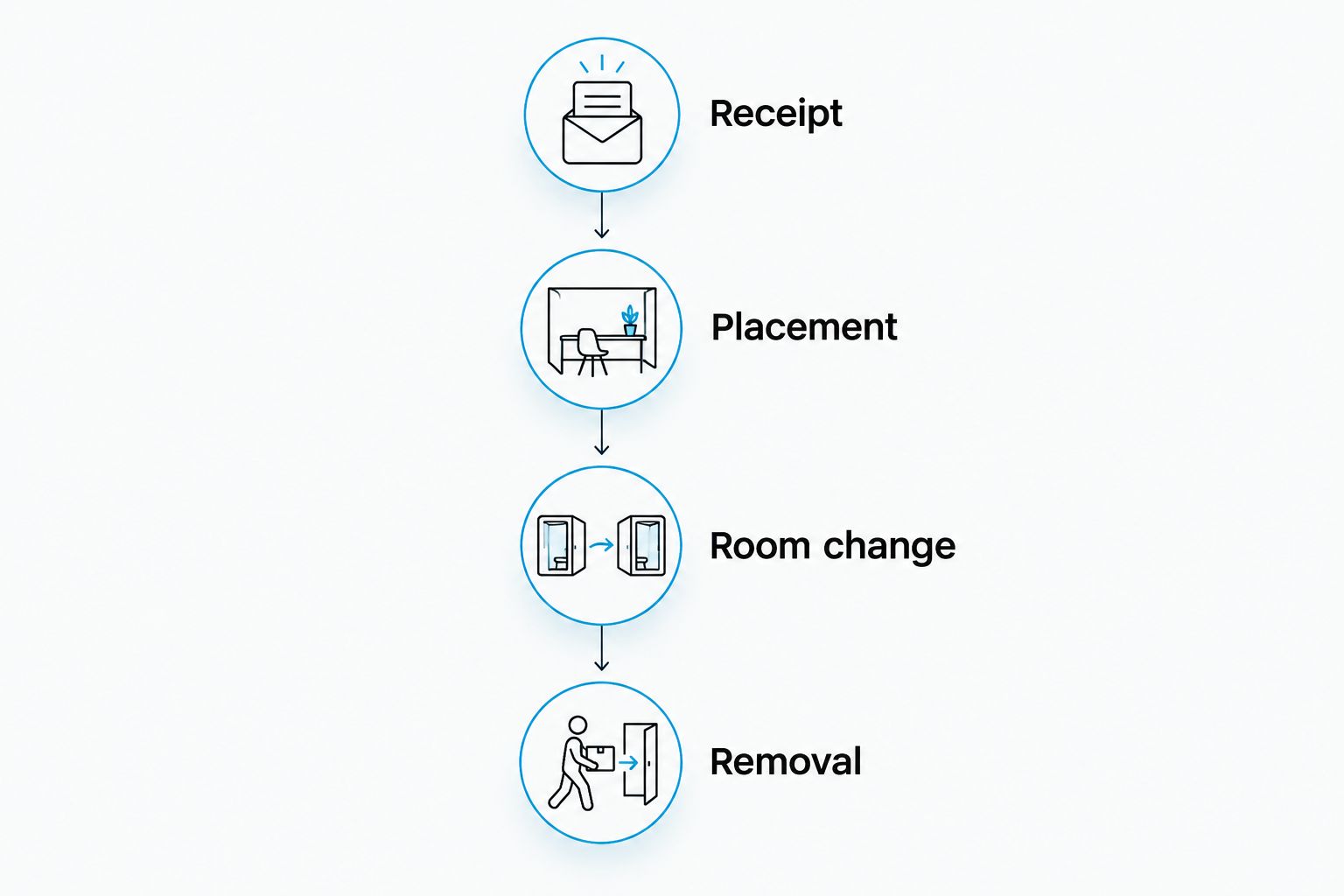
Set 3 checkpoints: receipt, placement and removal. At each checkpoint, assign an owner and define what needs checking. This keeps responsibility visible when the venue team changes shifts.
Use the following sequence in your 2026 run sheet. If a move conflicts with guest access or catering, revise the display plan rather than leaving the conflict for event day.
- Receipt: check the order against the placement list.
- Placement: confirm vessels are stable and routes remain clear.
- Room change: move only the arrangements agreed in advance.
- Removal: separate gifts, retained flowers and supplier property.
7. Close the order with a written handover
Finish with a concise document rather than a chain of messages. Give the venue team the arrangement list, placement photographs, delivery details and removal instructions in the same place.
Ask the supplier for care instructions specific to the flowers and format ordered. Cut flowers and planted orchids need different handling; do not apply a single routine to every display. Keep water and preparation work away from electrical equipment and surfaces that need protection.
For repeat weddings during 2026, retain the venue's access notes and approved setup photographs. Keep the couple's design choices separate so they are not accidentally carried into another booking.
The handover is complete only when every arrangement has an owner and a destination. Include what happens after the guests leave.
- Confirm who checks flowers on arrival.
- Attach supplier-specific care instructions.
- Record permission for guests to take flowers home.
- Identify any vessels or equipment requiring return.
- Confirm who clears water, packaging and remaining stems.
Compare flower options for wedding venues
Choose the format around the work your team can actually complete. These are purchasing and handling options, not interchangeable services. Each has a useful role and a limitation that belongs in the brief.
| Option | Best for | Main advantage | Key limitation |
|---|---|---|---|
| Hand-tied bouquets | Small, staff-managed display points | You can position the flowers in an agreed vessel | Staff must confirm vessel suitability and handle placement |
| Vase arrangements | Welcome desks and reception surfaces | Flowers arrive in a display format when the vessel is included | You still need to confirm dimensions, handling and placement |
| Planted orchids | Stationary welcome or signing-table displays | A contained plant format suits a fixed display position | The pot, height and care requirements must suit the location |
| Bespoke installed florals | Arches, large structures and overhead designs | The design can be specified around the space | Installation, permissions and removal require a separate agreed scope |
Choose the simplest format that meets the approved design. Retail flowers suit straightforward placement; structural designs need more than a flower order. Confirm the actual contents and responsibilities for either route.
Common mistakes venue coordinators make
Treating a bouquet photograph as a room specification
A close-up leaves out scale, tableware and guest movement. Approve flowers against the floor plan and a sample setting, not against the image alone. Record the vessel and display position alongside the flower choice.
Assuming delivery includes wedding setup
Receiving a bouquet and dressing a room are separate jobs. Ask who removes packaging, supplies vessels, places arrangements and clears the work area. Put each answer in the handover rather than leaving it as a verbal assumption.
Reusing flowers without assigning the move
A ceremony-to-reception plan fails if the nominated staff are serving drinks or directing guests. Name the mover and check the route. If the destination is occupied, agree an alternative before the ceremony begins.
Leaving collection and ownership undecided
Guests need to know whether flowers are gifts and whether vessels must stay. Tell staff what can leave, what must remain and who collects supplier equipment. Do not leave that decision to whoever closes the room.
FAQ
What are the best flowers for wedding venues?
The best flowers for wedding venues are arrangements that fit the room, table setting and handling plan. Choose the format first, then agree flowers and colours with the couple and supplier.
Can a venue coordinator order wedding flowers online?
Yes, a venue coordinator can order bouquets and arrangements online. Confirm dimensions, vessels, delivery requirements and responsibility for setup before placing an event order.
Does Harry's Flowers offer same-day London flower delivery?
Harry's Flowers offers fresh bouquets and floral arrangements with same-day delivery for local London customers. Confirm the requirements for your wedding order directly; same-day delivery does not establish a specific event arrival time or installation service.
Can ceremony flowers be moved to the reception?
Ceremony flowers can be reused when the destination, vessel and handling plan suit both spaces. Assign a mover and check that the transfer does not conflict with guest access or catering.
Are hand-tied bouquets suitable as wedding centrepieces?
Hand-tied bouquets are suitable only when their size and vessel work with the table setting. Test sightlines, stability and serving space before approving them as centrepieces.
How early should flowers reach a wedding venue?
Flowers should reach the venue within an agreed window that leaves time for inspection and setup before guests enter. Set that window with the supplier using the venue's access arrangements and actual preparation work.
Who should remove wedding flowers after the reception?
The person or supplier named in the written event plan should remove wedding flowers. Record separately which flowers guests can take and which vessels or equipment require return.
One last thing
Test the second location before approving a reused arrangement. The ceremony position gets the attention, but the reception position determines whether the move is useful. If flowers will not fit safely beside the dining setup, give them another destination before the wedding day.