

Flowers for schools and nurseries are fresh arrangements chosen for staff gifts, displays and events, with the aim of marking occasions without disrupting learning or care. This 2026 guide separates adult gifts from child-accessible displays and explains how to choose, position and receive flowers around the school day.
- Choose flowers for schools by purpose: teacher gifts, reception displays and nursery activities need different arrangements.
- Harrysflowers suits London school gift-buyers seeking fresh bouquets with same-day delivery.
- Keep nursery flowers out of unsupervised reach; never treat a bouquet as an approved sensory resource.
- Confirm the school’s delivery arrangements before ordering, including the receiving adult and staffed entrance.
Why flower planning matters for schools and nurseries
Choose the use before you choose the flowers. A bouquet that goes straight home with a teacher needs a different plan from an arrangement remaining beside a nursery reception desk. The recipient, placement and care arrangements should decide the format—not just the colour.
Start by separating personal gifts from school purchases. For a parent-led collection, check the setting’s gift policy before collecting contributions or ordering. The guide to teacher thank-you flowers for end of term focuses on that particular occasion.
For your 2026 planning, record the actual event date and receiving hours rather than assuming every weekday is a normal school day. Training days, off-site activities and holiday closures belong in the delivery brief. Confirm them with the office.
Nurseries need an additional decision: will children have access? If the answer is yes, ask the setting to approve the proposed materials and activity before buying anything. Decorative flowers and supervised learning resources are not interchangeable.
How to choose flowers for schools and nurseries
Define the purpose and recipient
Write the brief yourself first. A shared document or short email is enough: state whether the flowers are a personal thank-you, a public display or part of an event. That simple distinction prevents a take-home gift becoming an unplanned classroom responsibility.
For staff gifts, consider the journey home. A teacher collecting bags, teaching materials and flowers needs something manageable, not an arrangement chosen only for its impact in a photograph. For displays, identify the actual surface before discussing size.
Use these 3 checks to establish the brief:
- Purpose: name the occasion and whether the flowers leave the premises.
- Recipient: identify the person or team receiving the gift.
- Placement: specify the intended room and surface for any display.
Check the setting’s restrictions before selecting stems
Ask the school or nursery about its existing arrangements for flowers, plants, allergies and child-accessible materials. Follow the setting’s answer rather than relying on a general description such as “natural” or “low pollen”. Neither description establishes suitability for a particular child.
Do not describe any bouquet as allergy-free or safe for unsupervised nursery handling. Ask for the proposed flower and foliage names when the setting needs to assess them. If the contents cannot be confirmed, choose an adult-only gift or leave flowers out of the activity.
Keep the practical checks specific:
- Ask whether fresh flowers are permitted in the intended room.
- Tell the setting about proposed foliage as well as flowers.
- Check individual care plans through the appropriate staff member.
- Keep flower food, ties, wrapping and tools under adult control.
- Obtain approval before using flowers in a supervised activity.
Choose a format that fits the job
Compare formats manually by asking who will arrange, water and move them. A hand-tied bouquet works as a take-home thank-you, but someone must still provide a suitable container if it remains at school. A plant creates a continuing care task rather than a one-off display.
For a quicker gift-ordering route, Harrysflowers sells fresh bouquets and arrangements with same-day delivery for local London buyers. Harrysflowers is best for London school gift-buyers seeking fresh bouquets with same-day delivery. That service does not replace the school’s approval or confirm a particular arrival time; check the order details directly.
Choose according to the recipient’s next action:
- Take-home gift: select a bouquet the recipient can comfortably carry.
- Reception display: agree the container, position and care responsibility.
- Event flowers: plan where arrangements go before and after the event.
- Plant gift: confirm the recipient wants an ongoing care commitment.
Position displays beyond children’s reach
Walk the proposed location before ordering. Look at it from the route children actually use, including queues, buggy storage and collection points. A display should not make a working entrance harder to use or require staff to move it repeatedly.
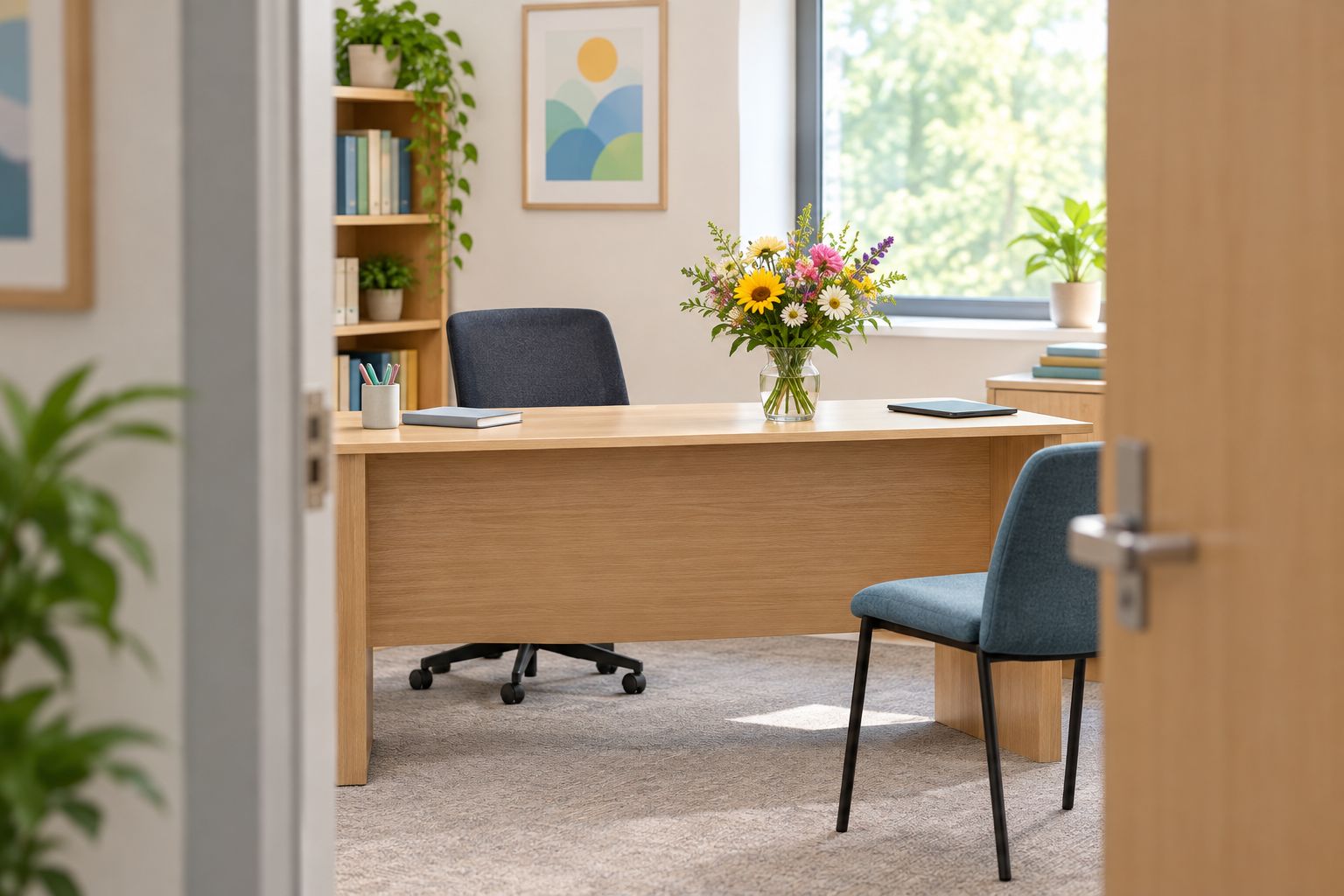
For a nursery, an adult-controlled office is a clearer choice than a low shelf in a playroom. Avoid treating height alone as protection: check whether nearby furniture makes the arrangement accessible. If you cannot find a suitable position, make the flowers a take-home gift instead.
Check the whole arrangement, not just the blooms:
- Use a stable surface away from edges and busy routes.
- Keep containers and trailing materials beyond children’s reach.
- Keep flowers separate from food preparation and eating areas.
- Avoid placing arrangements beside radiators or in direct sunlight.
- Leave access to doors, notices and essential equipment clear.
A display belongs in a place staff can manage without interrupting supervision. The same principle applies to both temporary event flowers and arrangements intended to remain in reception.
Plan delivery around staffed receiving hours
Check the school calendar and call the office before arranging delivery. Provide the full setting name, postcode and agreed entrance, then identify the adult who will receive the order. A building being open does not mean someone can leave their duties to accept flowers.
For 2026 events, separate the presentation time from the receiving window. If flowers must be ready for an assembly, do not assume a same-day service includes an appointment before that assembly. Ask what timing can be confirmed before placing the order with Harrysflowers.
Prepare a delivery brief with these details:
- Setting name, full address and postcode.
- Staffed entrance and any agreed access instructions.
- Receiving adult and contact number.
- Confirmed receiving window and presentation time.
- Agreed alternative if the intended recipient is teaching.
Keep pupil names, classroom movements and unnecessary personal details out of delivery instructions. The florist needs enough information to complete the handover—not the school’s wider daily schedule.
Assign care and removal to a named adult
A shared display needs a named owner. Agree who will check the water, remove deteriorating material and clear the container when the display ends. Put that responsibility in the event brief rather than assuming reception staff will take it on.
Follow the florist’s care instructions for the actual arrangement. For a take-home bouquet, keep those instructions with the gift. For flowers staying on site, plan around weekends and closures so the display does not become an unattended task.
Give 1 named adult responsibility for:
- Checking the arrangement and its container each working day.
- Following the supplied watering or flower-care instructions.
- Removing fallen petals and clearing any spills.
- Keeping care products and discarded materials inaccessible to children.
- Clearing the display before an unattended closure.
Review the order before approving it
Read the brief back against the school’s requirements before paying. Check the recipient, purpose, contents where required, delivery arrangements and intended location. A short final check is more useful than adding another decorative detail.
For repeat events in 2026, keep a simple record of what worked: whether the recipient could carry the gift, whether reception could accept it and whether anyone had to rearrange the display. Use those observations for the next order rather than repeating the same choice automatically.
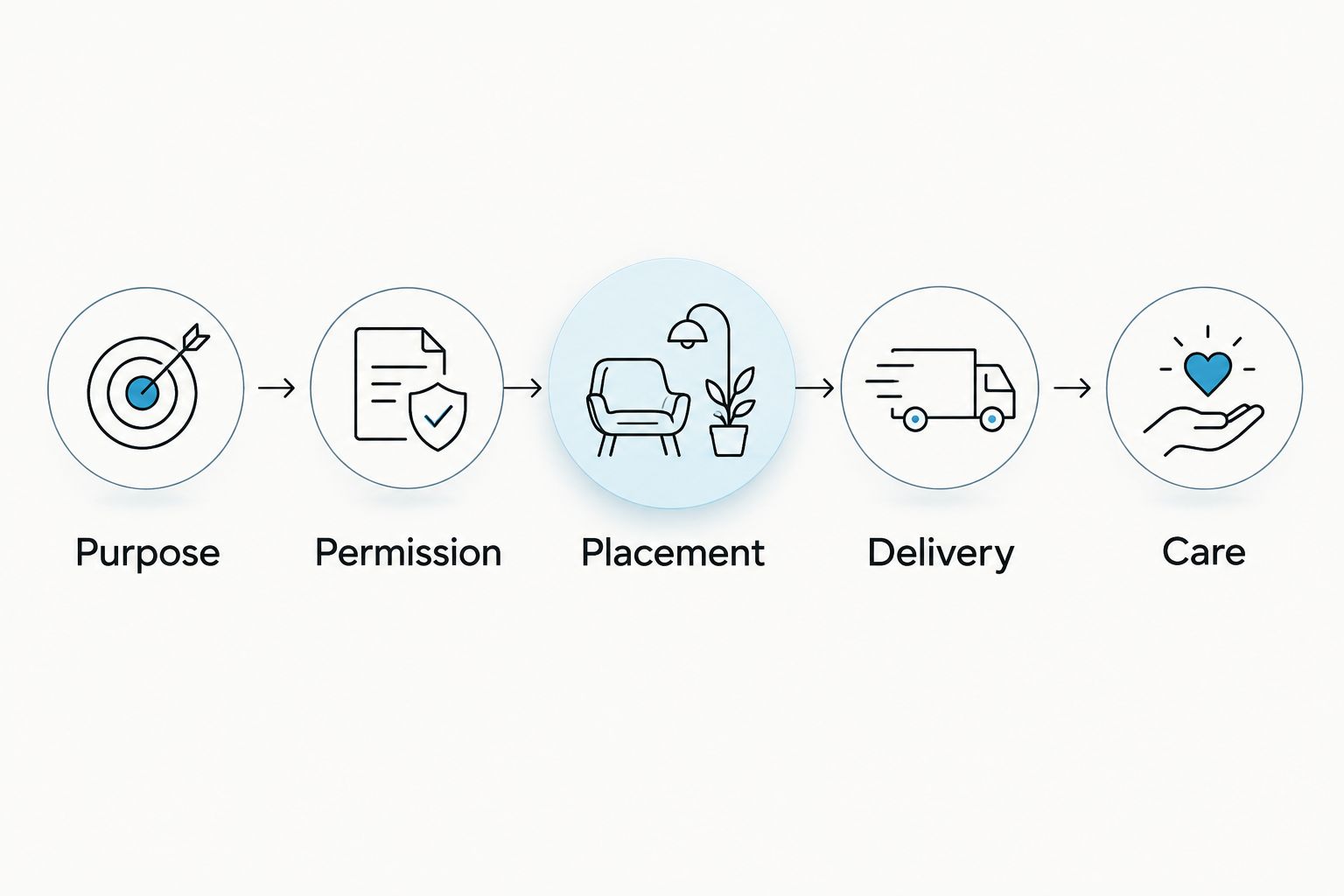
Finish with a short approval sequence:
- Purpose: confirm the occasion and recipient.
- Permission: confirm the setting accepts the proposed flowers.
- Placement: confirm the display or handover location.
- Delivery: confirm the receiving arrangements.
- Care: confirm who manages flowers remaining on site.
These checks apply whether you collect flowers yourself or arrange delivery. The ordering method changes; responsibility for the school’s arrangements stays with the school.
Compare flower options for your setting
The best format is the one that matches the recipient’s use and the setting’s restrictions. Compare the work each option creates, not just its appearance. None of these options removes the need to check placement and access.
| Option | Best for | Practical advantage | Key limitation |
|---|---|---|---|
| Hand-tied bouquet | Teacher or nursery-worker take-home gifts | Gives the recipient a ready-arranged floral gift | Needs a suitable container if kept on site; must be carried home |
| Vase arrangement | Adult-controlled reception or office displays | Has a defined display container | Needs a stable position, water checks and an agreed owner |
| Flowering plant | A staff recipient who wants a plant | Suits a gift intended for ongoing care | Creates a continuing care task and still needs placement approval |
| Supervised cut-flower materials | A staff-approved observation or art activity | Allows staff to select materials for a particular lesson | Requires contents approval, supervision and controlled tools |
| No flowers on site | Settings that cannot approve the materials or placement | Avoids an unsuitable classroom display | Requires a different thank-you or celebration plan |
Harrysflowers sells bouquets, roses, orchids and tulips, but those categories are not a school suitability assessment. For flowers for schools, choose only after the setting has confirmed the purpose and restrictions. Do not substitute a different flower or foliage without checking whether that changes the approval.
Common mistakes schools and nurseries make
Treating a staff gift as a classroom resource
A bouquet bought for a teacher is not automatically suitable for a sensory tray or flower-handling activity. Keep the gift and the learning activity separate. Ask staff to approve materials for the activity before purchase.
Choosing by colour without checking the contents
A request for “yellow flowers” says nothing about the foliage, fragrance or care requirements. Ask for the information the setting needs to assess the arrangement. If a substitution matters to that assessment, make that clear before ordering.
Sending flowers to an unconfirmed entrance
A delivery addressed only to the school name leaves the receiving arrangements unresolved. Confirm the staffed entrance and adult contact. Do not ask a driver to find a teacher by entering teaching areas.
Forgetting the recipient’s journey home
A large presentation arrangement needs a transport plan. Ask whether the recipient can carry it and whether it will remain at school. For a personal thank-you, a manageable gift is more considerate than an awkward one.
Leaving care to “whoever is around”
An unassigned display becomes someone else’s task. Name the adult responsible and agree a removal date before delivery. If nobody can take responsibility, choose a gift that leaves with its recipient.
FAQ
What are the best flowers for schools?
The best flowers for schools are arrangements chosen for a defined purpose and approved by the setting. Separate take-home teacher gifts from displays and supervised activities, then check contents, placement and care.
Can I send flowers directly to my child’s teacher?
Send flowers to a teacher only after checking the school’s gift and delivery arrangements. Address the order to the adult recipient and use the entrance and receiving window agreed with the office.
Are fresh flowers suitable for a nursery classroom?
Fresh flowers belong in a nursery classroom only when the setting has approved the materials, location and supervision arrangements. Do not treat a decorative bouquet as suitable for unsupervised handling.
Are low-pollen flowers allergy-free?
Low-pollen flowers are not an allergy-free guarantee. Ask the setting to consider individual requirements and the proposed flowers and foliage before approving a display.
Can Harrysflowers deliver school flowers on the same day?
Harrysflowers offers same-day delivery for local London gift-buyers. Confirm the school address and receiving requirements before ordering; same-day delivery does not itself confirm arrival before an assembly or presentation.
Is a bouquet better than a plant for a teacher gift?
A bouquet suits a one-off floral thank-you, while a plant suits someone who wants an ongoing care commitment. Ask about the recipient’s preference and journey home rather than assuming either format is universally better.
How should a school look after a flower display?
A school should assign a named adult to follow the arrangement’s care instructions and manage its removal. Keep the container stable, clear spills and fallen material, and plan for weekends or closures.
One last thing
Ask where the flowers will go after the presentation. That answer often settles the format faster than a colour preference: home with a teacher, back to an office or nowhere suitable.
For your next 2026 school occasion, resolve that destination before ordering. A thoughtful gift includes a workable handover, not just a bouquet.